Cairo Public Transport, Metro, Monorail, Buses and Taxis in 2026

Transport5 min read

You can manage in Cairo without a car if you know which transport goes where. Here is a guide to the metro, the new monorail, buses, microbuses and ride-hailing apps, and to what fares cost in 2026.
How Cairo transport works
The fastest way to get around Cairo is the metro. In recent years a monorail and the LRT light rail to the eastern suburbs have been added, while buses, microbuses and taxis cover the rest. Traffic in the city is heavy, so wherever there are rails the trip is usually faster and more predictable.
It is handy to plan your route in a maps app on your phone, which shows metro lines and some bus routes. Carry small notes, because large ones can cause trouble at ticket offices and in microbuses.
Cairo Metro, three lines
Three metro lines currently operate in the city. You can change between them in the centre, for example at Sadat, Nasser and Attaba stations.
- Line 1 runs south to north, from Helwan through Maadi and downtown to New El Marg.
- Line 2 links Shubra El Kheima in the north with Giza and El Mounib station in the south.
- Line 3 runs from Adly Mansour in the east through Heliopolis, Cairo Stadium station near Nasr City and downtown to Imbaba and Cairo University.
How much the metro costs
The ticket price depends on the number of stations. Since 27 March 2026 a trip of up to 9 stations costs 10 pounds, up to 16 stations 12 pounds, up to 23 stations 15 pounds, and a longer one 20 pounds. Students and daily commuters save with a subscription, so ask at the ticket office about the terms. Fares change, and current prices are published by the Ministry of Transport of Egypt.
Every train has women-only cars, usually in the middle of the train, and their position is marked on the platform. Women may also ride in the general cars. At rush hour the metro is very crowded, so keep your bag in front of you.
Monorail, LRT and new lines
In 2026 Cairo opened the East Nile monorail. The first section opened to passengers on 6 May, and on 27 June the whole line of 22 stations was launched, from Cairo Stadium in Nasr City through New Cairo to Justice City in the New Administrative Capital. For students the key stop is Al-Azhar University station next to the main campus and dormitories. At Cairo Stadium you can change to Metro Line 3, and at Arts and Culture City station to the LRT.
The fare depends on distance. In May 2026 a trip of up to 5 stations cost 20 pounds, and up to 10 stations 40 pounds. When the full line opened, trains ran from 6 am to 9 pm, and a 50% ticket discount applied on Fridays, Saturdays and public holidays.
The LRT light rail runs from Adly Mansour station through Obour and Shorouk to Badr, where branches lead towards 10th of Ramadan and the New Administrative Capital. Metro Line 4 is still under construction, with the first section promised for 2028. The West Nile monorail line to 6th of October City is not finished yet either.
Buses and microbuses
City buses are cheap and run along major streets, but they are often packed at rush hour. Since 2025 a BRT rapid bus line has been running on the Ring Road, connected to the metro at several stations.
Microbuses go almost everywhere the metro does not. They have no stops in the usual sense: you flag one down, tell the driver where you are going and get off by asking him to stop. You pay the driver in cash, and money is often passed along through other passengers. The driver or his assistant often shouts the destination, so ask locals about the route in advance.
Taxis and apps
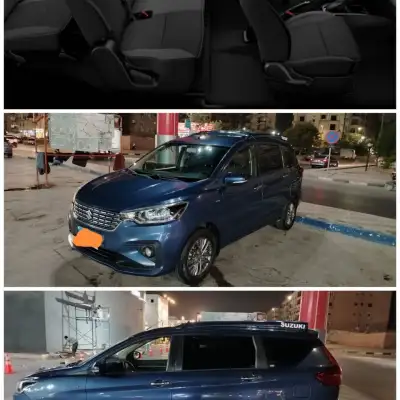
For newcomers the easiest option is ride-hailing: you see the price in advance, the route is recorded, and you can rate the driver afterwards. Uber, Careem, inDrive and DiDi all work in Cairo. In inDrive the passenger offers a price, and the driver accepts it or suggests another. You can usually pay by card or in cash.
White city taxis can be hailed on the street. They have meters, but drivers do not always switch them on, so before getting in ask for the meter or agree on a price. It is useful to compare it with the price of the same trip in an app.
Swvl and fixed-route rides
Swvl, an app that started in Egypt, carries passengers in minibuses on fixed routes. You book a seat in the app and board at a set stop at a set time. For a daily commute to classes or work it is usually cheaper than a taxi and more comfortable than a microbus, but routes do not cover every district. Swvl also offers trips from Cairo to other cities.
Staying safe on the road
- Check the plate number, car model and driver name against the app before you get in.
- Sit in the back and share your trip with friends using the app feature.
- Do not agree to cancel the booking and pay cash off the app.
- Keep your phone and wallet close in the metro and microbuses, as there can be pickpockets in crowds.
- In the evening women may find ride-hailing apps or the women-only metro cars more comfortable.
- Carry your passport or a copy of it, as documents may be checked.
Transfers and taxis on Tullab
If you need a driver for the day, a ride to the airport or to another city, check the transfers and taxis section. The road to the sea is covered in detail in our article how to get from Cairo to Hurghada and Sharm El Sheikh.
Drivers and carriers can post a listing for free, and all city listings are collected on the Cairo page.